
From Ur to Online: The 5,000-Year History of Backgammon
From the Royal Game of Ur to medieval tavla to today's online tables — how the world's oldest board game endured.
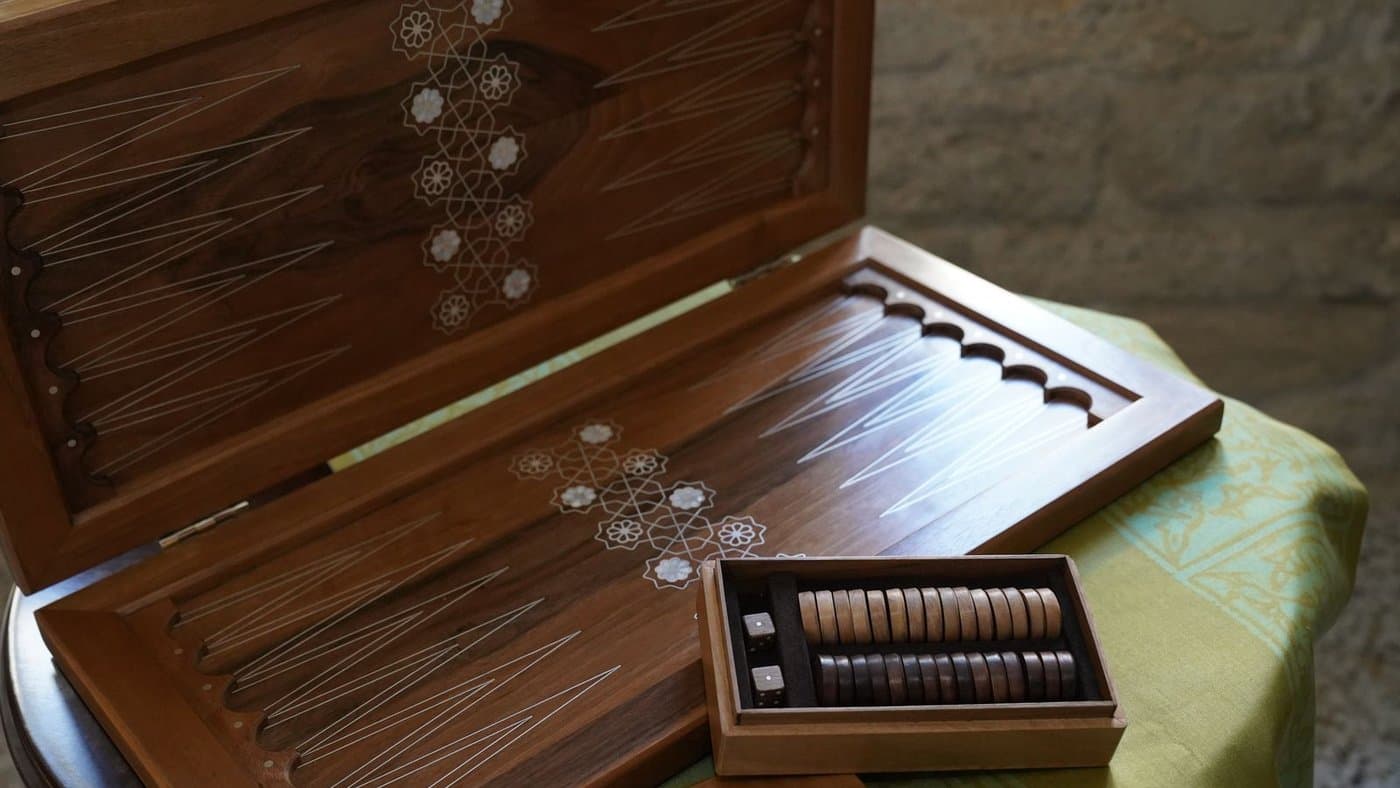
Backgammon is among the oldest games still played today. Its lineage stretches back roughly five thousand years, surviving the fall of empires, religious bans, and the arrival of the internet — and arriving in your pocket almost unchanged in spirit.
The Royal Game of Ur
The earliest known ancestor is the Royal Game of Ur, played in Mesopotamia around 3000 BCE. Excavated boards from the city of Ur show a race game played with dice-like markers across marked points. The principle is already there: chance from the roll, choice in how you use it.
Senet, Nard, and Tabula
In Egypt, Senet boards appear in tombs, including Tutankhamun's. In Persia, Nard formalized a two-player race with the modern 24 points and the doubling tension between luck and skill. The Romans played Tabula — so close to the modern game that a surviving account describes the emperor losing a position on a single unlucky roll.
The board changed surprisingly little. What changed was who was allowed to play it.
Tavla, tric-trac, and the parlour game
Across the medieval world the game spread under local names — tavla in the Eastern Mediterranean, tric-trac in France, "tables" in England. It was beloved and periodically banned, often because of the gambling that followed it. By the eighteenth century it had settled into the European parlour as a respectable two-player classic.
The cube changes everything
The single biggest modern innovation is young: the doubling cube appeared in 1920s New York. By letting either player raise the stakes mid-game, it transformed backgammon from a pleasant race into a game of nerve and equity — and made it a serious gambling and tournament game.
From felt boards to live tables
Computers cracked the next chapter. Neural-network engines like TD-Gammon showed that a machine could teach itself world-class play, and modern bots now serve as both opponents and tutors. Online platforms put a global player pool on every device — which is exactly where Backgammoner picks up the story, five thousand years later, with the same two dice and the same old question: how will you play the roll you are given?